The order that started it
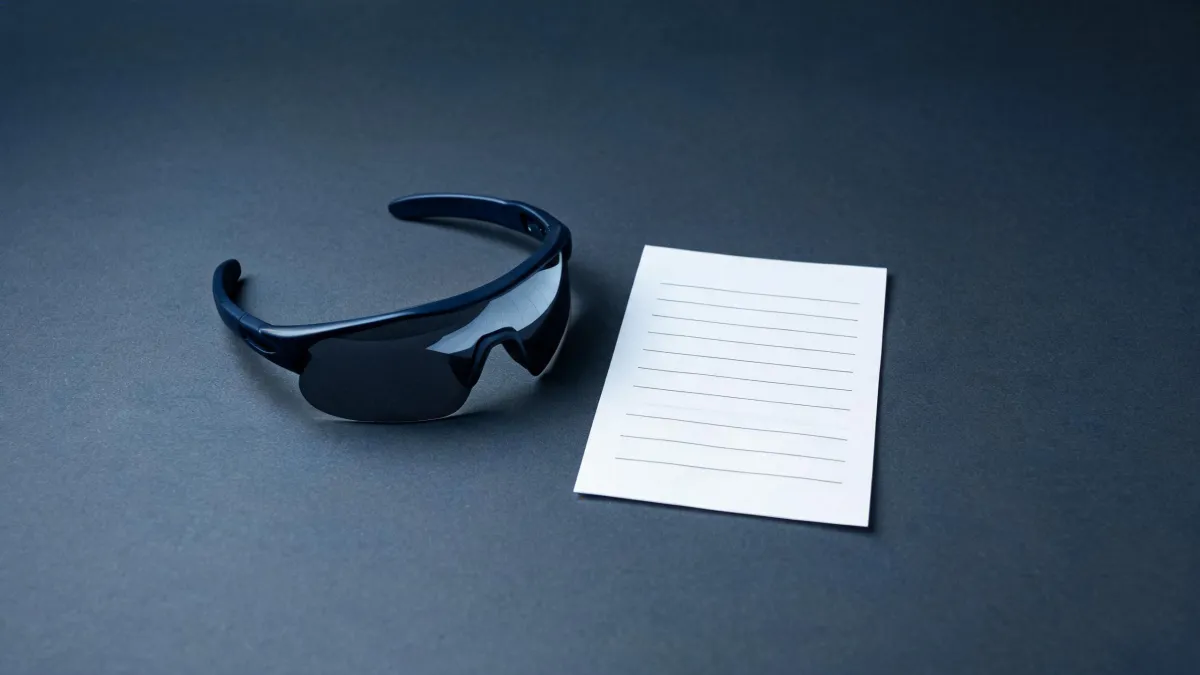
In February 2024, we got a request from a mid-size golf retailer. They wanted 1,200 pairs of golf sunglasses for men, with about 30% of the run built as prescription golf sunglasses. The target was a wrap-style frame, mirrored lens, and a golf-specific tint that would help with reading greens. On paper, it looked like a standard golf sunglasses sourcing job.
I’m the quality and brand compliance manager at a golf eyewear sourcing company. I review every shipment—roughly 150 SKUs a quarter—before it reaches our B2B accounts. My job is not to sell. It’s to reject anything that would embarrass a brand or confuse an optician. So I wrote the spec, sent it to three vendors, and picked the one with the best sample.
In my first year, I made the classic spec error: assumed ‘wrap frame’ meant the same thing to every vendor. Cost me a $3,800 redo on a different project. I thought I’d learned that lesson. I hadn’t learned all of it.
Where the first batch went wrong
The vendor delivered on time. (Should mention: we’d built in a 3-week buffer, which later saved the launch.) The cartons looked clean. The frames matched the approved pantone. The lenses had the right mirror finish. Then we pulled 50 pairs for wear testing.
That’s when the complaints started. Wearers said the ground looked slightly warped when they looked down at the ball. Not every pair. But enough. We measured the first 25. We rejected about 15%—or rather, 18% once we tested the second half of the batch. The axis alignment was off on the prescription lenses, and the optical center was sitting too high in the wrap frame.
The vendor’s response was predictable: ‘Within industry standard.’ I assumed if the sample passed, production would match. Didn’t verify. Turned out the sample was hand-adjusted by the vendor’s best technician. The production line didn’t do the same wrap compensation. In a wrapped golf frame, a prescription lens needs more than a standard Rx. It needs compensation for face-form angle and pantoscopic tilt. Otherwise the wearer gets distortion, and a golf glasses prescription that works on a desk can fail on the course.
Never expected the problem to be the Rx compensation, not the tint. Turns out the tint was fine. The geometry was off.
The fix and what it cost
We rejected the batch. The vendor claimed it was within tolerance. We sent them our measurement data: 12 of the 50 pairs had more than 2 degrees of unwanted prism, and several had axis errors beyond our internal limit. They redid the lenses at their cost. The ‘rush’ option added 22% to the unit cost (which, honestly, felt excessive for a fix they should have caught). Hidden costs add up fast (like re-lens charges, re-shipping, and re-inspection labor).
They were ‘flexible.’ What I mean is they’d negotiate on price but not on optical specs. Once we threatened to move the program, they brought in a lab tech who actually understood wrap compensation. The second batch passed. We shipped 1,196 pairs—four were damaged in rework and credited. The retailer launched on time.
I should add that we’d been with that vendor for two years before this. They weren’t a bad vendor. They were a vendor that had never been asked to prove wrap compensation on a production run. The vendor’s responsiveness dropped after the first order (note to self: monitor this).
What I changed in our sourcing process
After that batch, I rewrote our golf sunglasses sourcing checklist. Not because the old one was wrong. Because it was incomplete. Five years ago, many B2B buyers treated golf sunglasses as fashion accessories. In 2025, prescription golf eyewear is a performance category. What was best practice in 2020 may not apply. The fundamentals—UV protection, durable hinges, consistent tint—haven’t changed. But the execution has transformed.
Now every contract for prescription golf sunglasses includes four things:
- A written definition of wrap compensation, including face-form angle and pantoscopic tilt.
- A pre-production sample from the actual production line, not the lab bench.
- A 10-point inspection protocol for every 50-unit lot.
- A lab report before any UV or prescription-ready claim goes on the box.
Per FTC advertising guidelines (ftc.gov), claims must be truthful and substantiated. We don’t print ‘100% UV protection’ or ‘prescription-ready’ until the lab report supports it. That’s not just legal caution. It’s brand protection. A retailer who gets sued over a false claim won’t reorder.
What I’d tell another B2B buyer
If you’re sourcing golf sunglasses for men, don’t stop at frame style and lens color. Ask the vendor how they handle prescription lenses in a wrap frame. Ask for the compensation calculation. Ask what happens when the Rx is outside the base curve range. If they can’t answer, assume they haven’t done it at scale.
My experience is based on about 40 sourcing projects with mid-range golf eyewear. If you’re working with ultra-premium or ultra-budget segments, your experience might differ. The budget vendor may cut corners on compensation. The premium vendor may over-engineer it. Neither is automatically right for your program.
The search term ‘golf sunglasses mens’ or ‘golf glasses prescription’ doesn’t tell you anything about optical performance. It just tells you what people type. Your spec has to go deeper.
This was accurate as of Q2 2024. Optical standards and vendor capabilities change, so verify current specs with your lab and your legal team. I learned this in 2024. Things may have evolved since then—especially with new lens materials and digital surfacing.
If I had to reduce the whole story to one lesson: sample approval is not production approval. In golf eyewear, the gap between a hand-built sample and a 1,200-unit run is where quality goes to die. Close that gap before you sign the PO.
One more thing. We now require every vendor to sign a wrap-compensation addendum before we place a bulk order. It’s two pages. It has saved us at least three reworks since. The cheapest lens is the one you don’t have to replace.
